
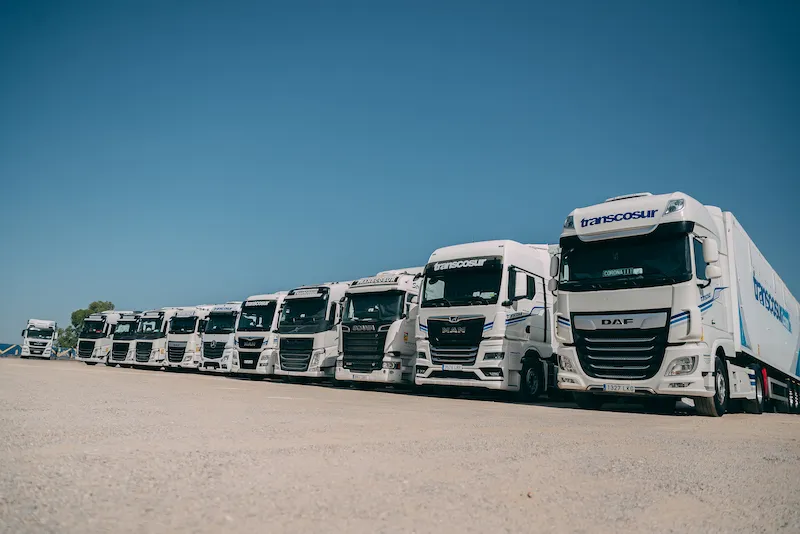
Lorry driving ban in France: weekends, public holidays and summer Saturdays
Guides · Published on
A loaded lorry can sit for 24 or 48 hours in France for missing 22:00 on Saturday. Here are the rules of the French order of 16 April 2021 and how to plan a load so it keeps moving.
The lorry driving ban in France at weekends is the most common reason a load stops a few hours short of its destination. The basic rule fits on one line, but public holidays, summer Saturdays and exemptions complicate it. This guide sets it out from the official texts: the French order (arrêté) of 16 April 2021, published in the Journal officiel on 24 April, and the 2026 calendar published by Bison Futé, the French government’s traffic information service. It is written for shippers sending goods to or from Spain, often through France. It is general information, not legal advice.
Can lorries drive in France at the weekend?
Only partly. Goods vehicles over 7.5 tonnes may not run in France from 22:00 on Saturday until 22:00 on Sunday. The same applies to every French public holiday, from 22:00 on the eve until 22:00 on the holiday itself. This is Article 1 of the French order of 16 April 2021.
On Saturday during the day, lorries run normally, except on the Saturdays added each year, and the ban covers the whole road network, motorways included.
For road freight between Spain and France, in either direction, what matters is not the loading time but where the lorry will be at 22:00 on Saturday. A load from the UK heading for Spain crosses France and faces exactly the same question.
Which vehicles does the ban cover?
It covers goods vehicles and combinations over 7.5 tonnes permitted gross weight, whatever country they are registered in. The permitted weight counts, not the load: an empty articulated lorry stops too. Specialist vehicles that do not carry goods and agricultural vehicles and machinery are excluded, as listed in Annex II.
A British or Spanish lorry follows the French rule exactly as a French one does: the order makes no distinction by nationality. Around Paris, some sections of the A6, A10, A12, A13 and A106 motorways also have their own hours, such as Friday from 16:00 to 21:00 heading out of Paris, with none of the Article 4 exemptions (Article 3).
What happens on French public holidays?
Each French public holiday works like a Sunday: no driving from 22:00 on the eve until 22:00 on the holiday. When the holiday sits next to a weekend, the two bans run together and a lorry can be held for 48 hours in a row, as with Easter Monday or a 1 May that falls on a Saturday.
France has eleven national public holidays: 1 January, Easter Monday, 1 May, 8 May, Ascension Day, Whit Monday, 14 July, 15 August, 1 November, 11 November and 25 December, according to the official service-public.gouv.fr calendar. Today, 11 November 2026, is one of them: lorries have been stopped since 22:00 on Tuesday 10 November.
| Public holiday | Date | No driving |
|---|---|---|
| Christmas Day | Friday 25 December 2026 | from Thursday 24 at 22:00 to Friday 25 at 22:00, then from Saturday 26 at 22:00 to Sunday 27 at 22:00 |
| Easter Monday | Monday 29 March 2027 | from Saturday 27 at 22:00 to Monday 29 at 22:00 |
| Labour Day | Saturday 1 May 2027 | from Friday 30 April at 22:00 to Sunday 2 May at 22:00 |
| Ascension Day | Thursday 6 May 2027 | from Wednesday 5 at 22:00 to Thursday 6 at 22:00 |
These hours come from applying Article 1 to each date. In some years the ban for a particular holiday has been lifted by a separate order, as happened for Whit Monday 2021, so check the calendar before each long weekend.
UK bank holidays and Spanish holidays do not count in France. Boxing Day, for instance, is not a national public holiday in France.
Which Saturdays are added in summer and winter?
Each year an order adds Saturdays with their own hours. In summer, across mainland France, up to seven Saturdays with no driving from 07:00 to 19:00. In winter, on the Auvergne-Rhône-Alpes network, up to five Saturdays from 07:00 to 18:00 and again from 22:00. This is Article 2 of the 2021 order.
For 2026, the order of 26 December 2025 set the following dates, according to Bison Futé:
- Summer, whole network: Saturdays 11, 18 and 25 July and 1 and 8 August, from 07:00 to 19:00. On those Saturdays lorries could run from 00:00 to 07:00 and from 19:00 to 24:00.
- Winter, Auvergne-Rhône-Alpes: Saturdays 7, 14, 21 and 28 February and 7 March, from 07:00 to 18:00 and from 22:00 to 24:00.
The 2027 calendar has not been published yet. The last two were signed in December, so until then any summer date is a guess.
Which loads are exempt from the ban?
Exempt loads include lorries carrying only live animals or perishable goods listed in Annex I, provided they fill at least half the usable floor area or volume. Harvest collection to the store within the region and its neighbours, office and factory removals and healthcare supplies are also exempt, among others listed in Article 4.
Annex I includes fresh fruit and vegetables (potatoes, onions and garlic too), cut flowers and potted plants, honey, eggs and anything that has to be kept chilled or at a constant temperature. For a UK importer of Spanish citrus or potted plants, that makes a real difference.
The key word is “exclusively”. For palletised freight, a lorry with pallets of fresh fruit and pallets of tinned goods in the same load is not exempt. One carrying only fresh fruit that fills at least half the trailer is.
Two useful details:
- Multiple drops: on a run of perishable goods, in groupage and part loads for example, after the first drop the lorry may continue below half full, provided the later drops are in the region of the first or the neighbouring regions.
- Running empty: an exempt vehicle may run empty in the region of its first loading or last unloading and the neighbouring regions.
The driver must carry proof that the job is exempt (Article 8), and the prefect of each département can reinstate the ban if circumstances require.
Can you get a derogation to drive?
Yes, but not for any load. A prefect can grant temporary individual derogations in set cases, such as an urgent supply after a breakdown or a factory that runs at weekends and cannot store goods. The application goes to the prefect of the département of departure at least 72 hours ahead, and lasts a year at most.
This is Article 5. The haulier, its agent or the company ordering the transport can apply. For a lorry coming from Spain, the département of departure is the one where it enters France during the ban. Prefects of border départements can also lift the ban to ease differences with neighbouring countries (Article 6). These are one-off measures: do not plan around them.
How do you plan a load through France without getting stuck?
Plan around where the lorry will be at 22:00 on Saturday and on the eve of each French holiday. If it has not unloaded by then, there are three options: load earlier, agree a Saturday daytime delivery, or accept that delivery moves to Monday, with a full day waiting.
An example. Córdoba to Bordeaux is about 1,080 km, roughly 27 hours with one driver once driving, breaks and daily rest are counted. Loaded on Thursday morning, the lorry delivers on Friday. Loaded on Friday morning, it arrives mid-morning on Saturday and only unloads if the site receives on Saturdays. If not, delivery moves to Monday.
What helps the shipper most:
- Give the real delivery window, including closing days. Many sites do not receive on Saturdays, and that matters more than the ban.
- Watch weeks with a French holiday: with a holiday on a Friday or a Monday, load a day earlier.
- Say if the goods are perishable and listed in Annex I, as it can change the weekend plan.
Are there also lorry restrictions in Spain?
Yes, but they are different. In Spain, the DGT (the national traffic authority) publishes a resolution each year on special traffic measures, with lorry restrictions by date and road section; the 2026 one is dated 14 January. A load between the two countries has to fit both calendars and both sets of public holidays.
At Transcosur we check both before confirming a loading date: origin, destination, delivery hours and what happens if the lorry reaches Saturday night.
Frequently asked questions
Common questions
What time can lorries drive again in France on Sunday?
From 22:00 on Sunday. The general ban runs from 22:00 on Saturday to 22:00 on Sunday, and from 22:00 on the eve of a public holiday to 22:00 on the holiday, under Article 1 of the French order of 16 April 2021.
Does the French weekend ban apply to UK and Spanish lorries?
Yes. The order covers every goods vehicle over 7.5 tonnes gross weight on French roads, whatever its registration. French public holidays are the ones that count: UK bank holidays and Spanish holidays change nothing in France.
Can an empty lorry drive in France on Sunday?
As a rule, no, because the ban depends on the vehicle's permitted gross weight, not its load. Only vehicles on an exempt job may run empty, and only in the region of first loading or last unloading and the neighbouring regions.
Where is the official calendar published?
On Bison Futé, the French government's traffic information service, which publishes the rules and the Saturdays added each year. For 2026 they were set by the order of 26 December 2025.
Our services
How we do it
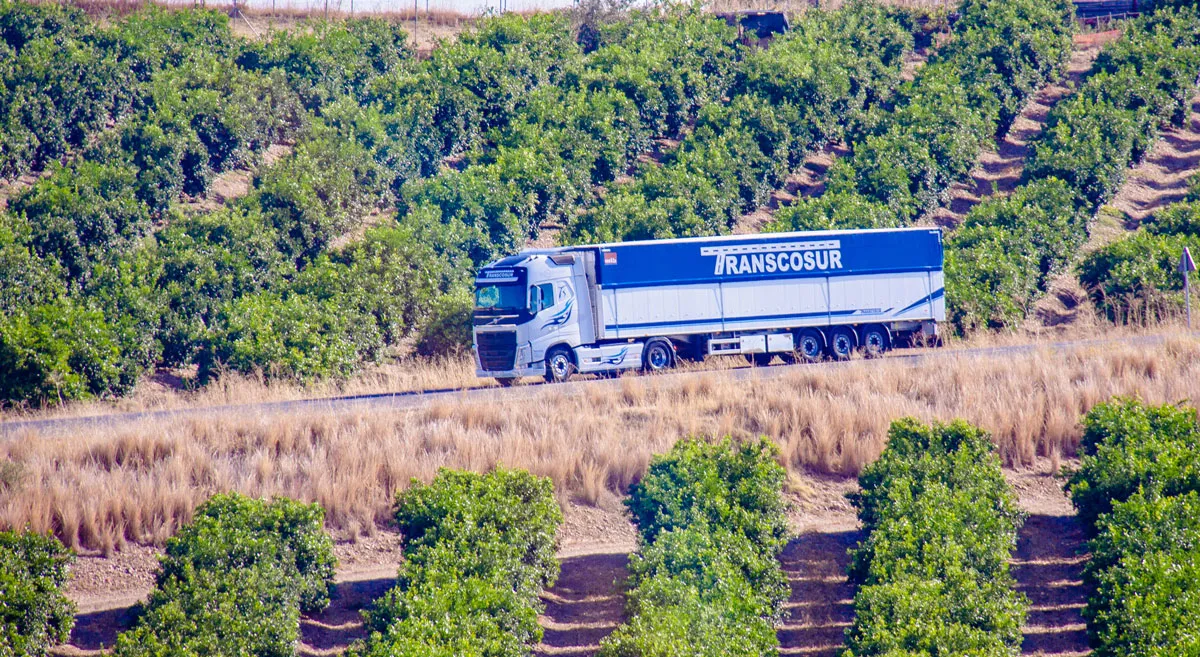
Spain and France
Regular routes between Spain and France in both directions, with bulk in walking floor and tipper trailers, biomass, scrap, palletised freight and groupage.

Palletised freight
Palletised goods as full loads, in curtainsiders loaded from the side or the rear, and in refrigerated trailers when they need to stay cool.
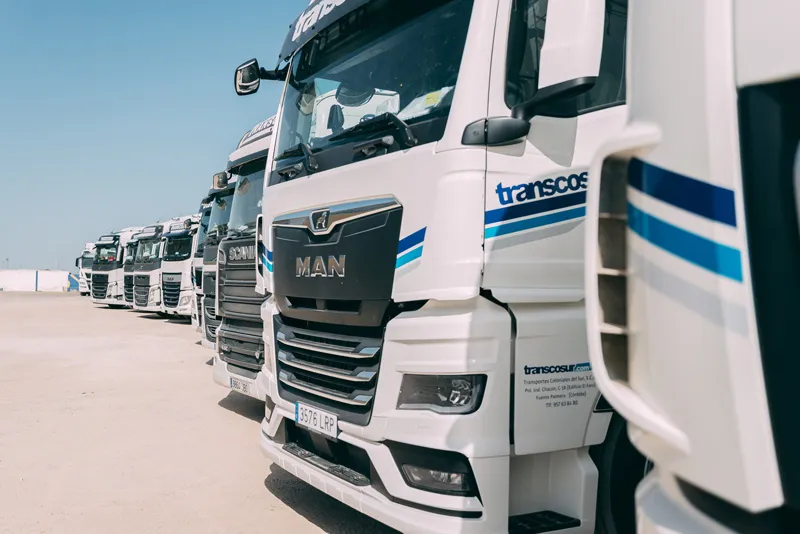
Groupage
For when you cannot fill a lorry: your load shares the journey with others in a curtainsider and you pay for the space it takes up.
Guides
More guides
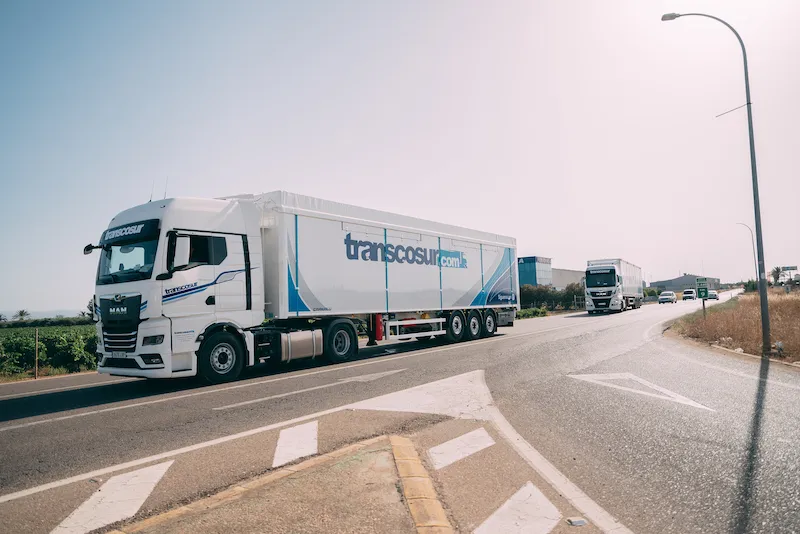
Lorry transit time from Spain to France: hours, breaks and rest
How long a lorry takes from Andalusia to Irun, Perpignan, Bordeaux or Lyon under the EU drivers' hours rules, with one or two drivers, and what adds time to a job.
CMR consignment note: what it is and how to fill it in
What the CMR consignment note is, when it applies, who fills it in and signs it, which boxes matter, how reservations work and the time limits for making a claim.
Road haulage quote: what information to give, and why it matters
Goods, weight or volume, collection and delivery points, loading, unloading, dates and frequency: what a haulier asks before quoting, and why each detail changes the price.
Get a quote
Request a quote for your load
Tell us what needs moving and between which points. We will call you back with a price and availability.