




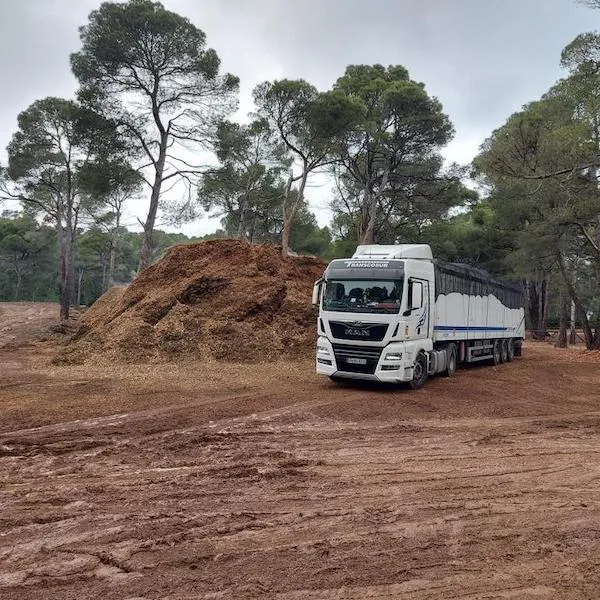
What biomass haulage involves
Biomass haulage means moving, in bulk, the plant material used as fuel: forestry wood chip, pruning waste, bark and other solid fuels. It leaves the forest, the farm or the industry that produces it and goes to a power plant, a district heating network or the boiler of a factory or building.
It is a service for forestry companies, biomass suppliers, power plants, fuel producers and any business that heats with biomass and needs its supply to arrive on time. At Transcosur biomass is a natural part of the bulk haulage we started with.
What biomass we move
- Forestry wood chip from pine, eucalyptus and other species.
- Pruning and thinning waste, chipped or unchipped.
- Bark and sawmill by-products.
- Agricultural biomass and other solid fuels loaded loose.
Each behaves differently. Dry chip is light and blows about easily; green chip weighs a good deal more; unchipped brash takes up a lot of room and does not settle well. Before allocating a lorry we want to know what it is, how wet it is and how it is loaded.
Why biomass haulage needs a walking floor
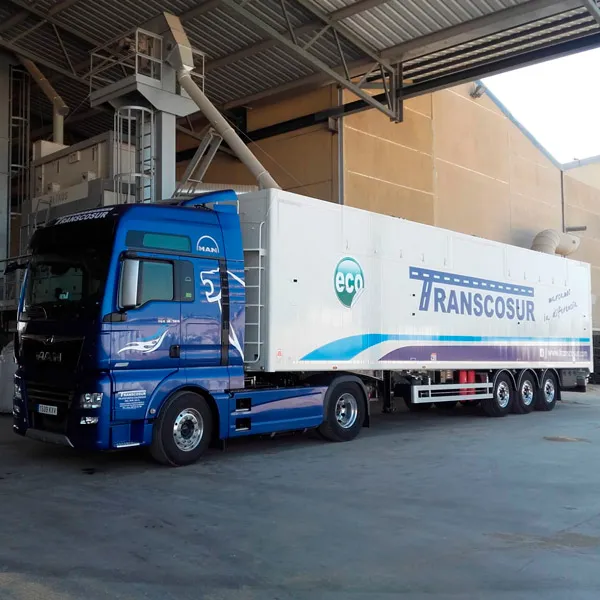
Biomass poses two problems for haulage: it takes up a lot of volume for its weight, and it is unloaded in places that are not always easy. The walking floor trailer solves both.
Plenty of volume
These are tall, long trailers designed for bulky, light goods. With wood chip the lorry is usually full before it reaches its maximum weight, so every cubic metre of body space counts.
Unloading without tipping
The walking floor is made of slats that move and push the load towards the rear door. The body is not raised, so the lorry can unload inside a building, under a canopy, next to a silo or in a sloping yard with no risk of overturning.
Complete emptying
The floor pushes right to the end and nothing stays stuck at the front. For the plant that means it receives what was weighed; for us, that the trailer is ready for the next load.
| Feature | Walking floor | Tipper |
|---|---|---|
| Volume | Tall, long body designed for light products | Shorter body |
| Unloading in a building | Yes, without raising the body | Needs a lot of headroom |
| Soft or sloping ground | Unloads safely | Risk of overturning with the body raised |
| Product that compacts | The floor pushes it out | Can stick to the body |
From forest to plant
Loading
Biomass is loaded with a loading shovel, a forestry crane or straight from the chipper, depending on where it is. If loading is in the forest, access is the key point: an articulated lorry needs a track in good condition and room to manoeuvre. Before sending the lorry we ask how to get there and what will be used to load it.
The journey
The load travels covered so that the chip does not blow off on the road or get wet on the way. The lorry is GPS tracked and the traffic office knows where it is at all times.
Unloading
At destination the lorry unloads by pushing the load out with its floor, into a pit, onto a reception floor or inside a building. If the plant has a weighbridge, the lorry goes over it on the way in and on the way out.
Regular supply
Many plants and boilers do not need a single trip but regular deliveries throughout the season. In those cases we plan the journeys in advance around the plant’s calendar, so that supply does not run out in winter, when it matters most. We work under a quality management system certified to UNE-EN ISO 9001:2015, which helps make sure every journey is recorded.
What we need to know to quote
- Type of biomass: wood chip, pruning waste, bark or other, and whether it is dry or green.
- Quantity: approximate tonnes or cubic metres, and whether it is one trip or a campaign.
- Loading point and access: forest, farm or industrial estate, and how it is loaded.
- Unloading point: pit, reception floor, building.
- Dates, and frequency if it is a regular supply.
Biomass haulage in Spain and France
We have regular customers and routes in Spain and France, and from there we reach other European countries. With biomass that helps us match return loads and offer availability in peak season. If your biomass crosses the Pyrenees, see also our page on road freight between Spain and France.
Read on
The trailers we use
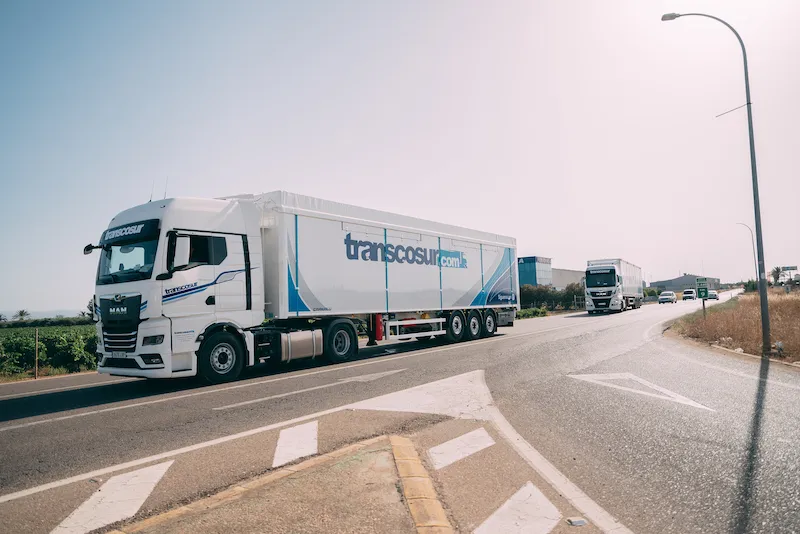
Walking floor
The trailer that unloads by pushing the load out with its own floor. For biomass, grain, scrap and waste, even inside a building.
Read on
What it is used for
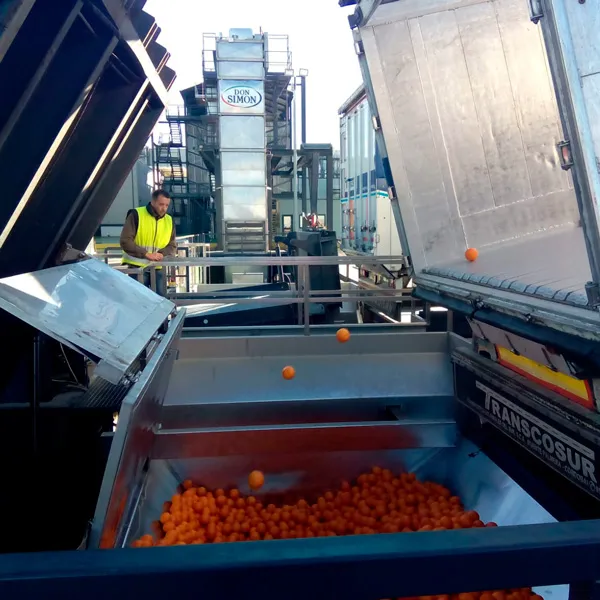
Bulk haulage
Grain, citrus fruit, wood chip and industrial products carried loose in walking floor and tipper trailers, across Spain, France and Europe.
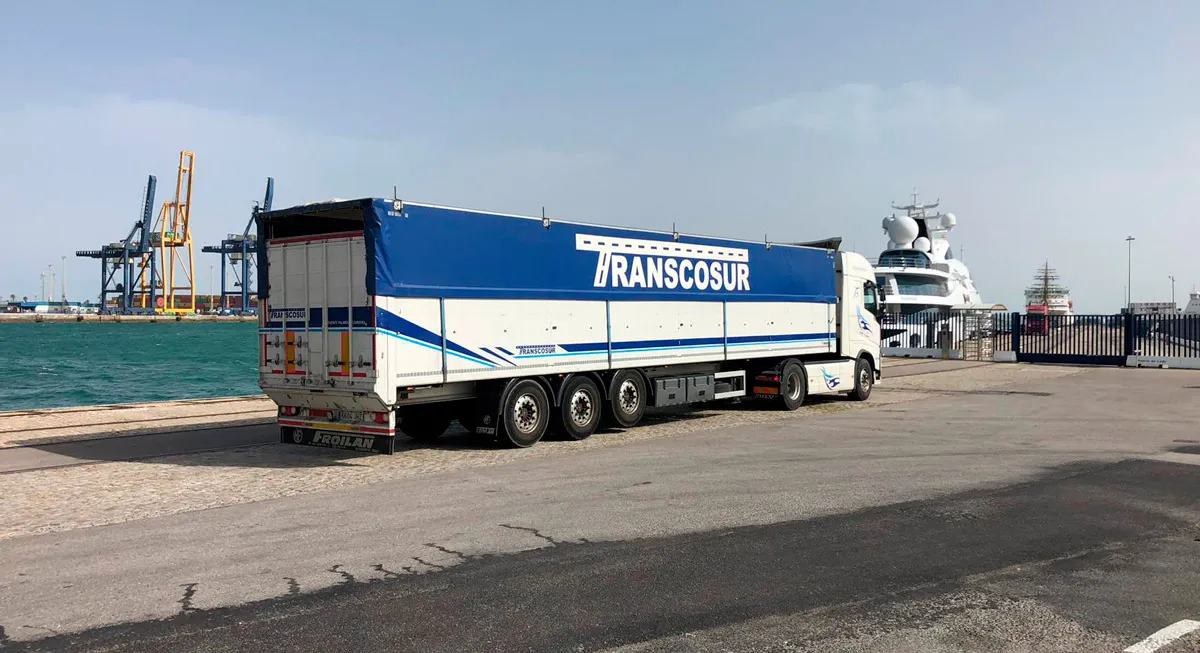
Non-hazardous waste
Non-hazardous waste and end-of-life tyres, in walking floors and scrap tippers, to recycling and recovery plants and authorised waste operators.
Organic grain
Organic wheat, barley, maize and other cereals in bulk, in a clean trailer and never mixed with conventional grain.
Frequently asked questions