
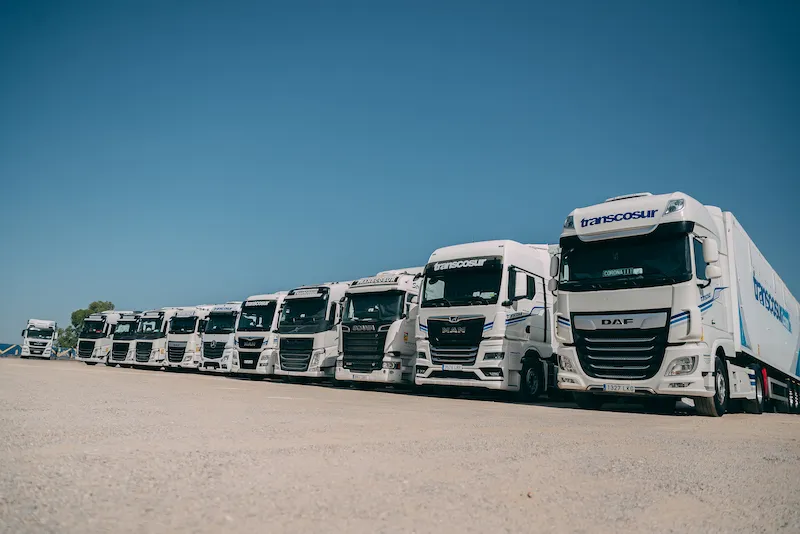
Road haulage quote: what information to give, and why it matters
Guides · Published on
A haulage price is only reliable if it rests on the right information. Here is what any serious haulier will ask you, and why each answer changes the quote.
Asking for a road haulage quote looks simple: you give a collection point and a delivery point, and wait for a number. Yet two loads with the same origin and destination can have very different prices, because the price does not come from the distance alone. It comes from the trailer needed, how long the lorry will stand still and whether it has a load for the return journey. This guide explains what a haulier needs to price a job, especially for freight to and from Spain and France, and why each detail changes the figure.
What information do you need for a road haulage quote?
For a road haulage quote you need six things: what the goods are and how they are packed, their approximate weight or volume, the collection and delivery addresses with postcodes, how the lorry is loaded and unloaded, the dates, and whether the job is a one-off or will repeat. With that, the haulier picks the trailer and prices the job.
Two more points are sometimes needed: temperature control and any special paperwork. You do not need everything to the last kilo. An honest estimate is worth more than a precise figure that turns out to be wrong on the day: if you say twenty tonnes and there are many more, the lorry booked may not be suitable.
Why do the collection point, delivery point and return leg matter?
The collection and delivery points set the distance, the tolls and the days on the road, but the price also depends on the return leg. A lorry that ends its run where there is no freight comes back empty, and somebody pays for that empty leg. So the same route costs more or less depending on area and direction.
Always give the town and the postcode, not just the region. Some sites, such as a farm reached by a dirt track or a warehouse in a town centre, limit the type of vehicle that can get in.
The return leg also explains why regular routes get better prices and more availability. A haulier with freight in both directions can match outward and return loads. It happens a lot on road freight between Spain and France: a shipper sending goods to Spain fills exactly the space on a Spanish lorry heading home.
What should you tell the haulier about the goods?
About the goods, say what they are, how they travel (loose in bulk, on pallets, in sacks or as loose items) and how much they weigh or how much space they take, even roughly. That decides the trailer and whether the lorry will fill up by weight or by volume first, one of the things that most affects the price.
A lorry has a weight limit and a volume limit, and the goods decide which one is reached first. Grain is dense: it reaches the maximum weight before the body is full. Wood chip or straw is light: it fills the body long before it reaches the weight limit. If you know the density or the tonnage, say so; if not, the product and an idea of the volume are enough.
The goods also decide the trailer. A loose product can travel in a walking floor or a tipper, and the right choice depends as much on the product as on the delivery site; we explain it on our bulk haulage page. Palletised goods usually go in a curtainsider, and anything that must stay cool, in a refrigerated trailer. For pallets, give the number, the size (Euro pallet, 1200 by 1000 or other), the height and weight, and whether they can be stacked.
How do loading and unloading affect the price?
Loading and unloading affect two things: the type of lorry that can get into each site and work there, and how long it will stand still. A loading bay, a forklift, a loading shovel, a pit or a low-roofed building each call for different equipment, and a long wait ties up a lorry that is not covering miles.
Say how the goods are loaded (shovel, conveyor, silo, forklift or loading bay) and how they are unloaded (inside a building, on open ground, into a pit or a hopper). That is what decides, for example, between a walking floor, which unloads without raising the body, and a tipper, which needs headroom and firm ground.
Give the opening hours of each site too, and say whether a booking slot is needed. Waiting has a cost, and in Spain it is set in law: article 22 of Spanish Law 15/2009 on contracts for the carriage of goods by land lets the haulier claim compensation when the lorry waits more than an hour for loading or unloading to finish. Knowing how each site works avoids those waits.
What difference do dates and frequency make?
Dates change availability, and with it the price: loading tomorrow is not the same as loading in two weeks, nor is a Monday the same as a Friday with delivery after the weekend. Frequency matters even more, because a route that repeats lets the haulier plan lorries and return loads in advance and offer better terms.
Give the loading date and the delivery date, and say whether each is fixed or flexible. A day of flexibility often lets your load fit into a journey that is already planned. Bear in mind too that heavy goods vehicles cannot use certain roads on some days, in Spain and above all in France at weekends and on public holidays, so a Monday delivery in France may mean loading in southern Spain on Thursday.
If the job will repeat, every week, every month or over a season, say so from the start, even if you only ask for a price for one trip.
Full load or groupage: knowing what you need
Before asking for a price, work out whether you need a whole lorry or only part of one. With a full load, the lorry goes from your collection point to your delivery point carrying only your goods, and you pay for the whole trip. With groupage, or part loads, you share the lorry with other consignments and pay for the space or weight you use.
With just a few pallets, groupage is usually cheaper. If you fill or nearly fill a trailer, a full load is more direct and your goods are handled less. Our palletised freight page sets out the pallet details needed in each case.
Does the price change if diesel goes up or down?
Yes, in Spain and in France it can. Article 38 of Spanish Law 15/2009 requires the price to be revised automatically when diesel moves by 5 per cent or more between the contract and the journey, up or down, unless a lower threshold was agreed in writing. The difference must be shown separately on the invoice.
That is the wording in force since 16 April 2026, as published in Spain’s official gazette, the BOE. In regular, continuous contracts the same article requires a revision at every billing period, whatever the change, and any agreement to the contrary is void. France has a similar rule: article L3222-1 of the French Transport Code revises the agreed price as of right when fuel costs change between the contract and the journey, as the DREAL Normandie fact sheet on fuel indexation sets out.
So a quote for several months ahead, or for a long season, is not a frozen figure: it is a price tied to a diesel reference.
Paperwork and special requirements
Some goods need more than the CMR consignment note. Waste travels with the documents for its shipment. A certified organic product needs a clean trailer kept apart from other products. Live plants and fresh produce need temperature control.
Mention it when you ask for the quote, not on the day of loading: it changes the lorry, the cleaning beforehand and sometimes the loading time.
A quote request done properly
Here is a request that can be priced first time:
- Goods: what they are and how they travel (bulk, pallets, sacks or loose).
- Quantity: approximate weight or volume; for pallets, number, size, height, weight and whether they stack.
- Collection and delivery: town and postcode.
- Loading and unloading: equipment available (bay, forklift, shovel, pit or building), opening hours and booking slots.
- Dates: loading and delivery, and how much flexibility there is.
- Frequency: one-off or a regular route, and how often.
- Special requirements: temperature, cleaning or paperwork.
At Transcosur, with these details we choose the trailer that suits your load and send you a price and availability. You can write to us in English.
Frequently asked questions
Common questions
How much does road freight to Spain cost?
There is no price per mile that fits every load. It depends on the goods, the trailer needed, loading and unloading, the dates and whether the lorry has a return load. With those details a haulier can give you a firm price for your job.
Can I ask for a quote without knowing the exact weight?
Yes. The product and an approximate weight or volume are enough. What matters is that the figure is realistic: if the real weight is much higher, the lorry booked may not be suitable.
Why does the same route cost different amounts in each direction?
Because the price also depends on the return journey. If there is freight at the destination, the trip pays its way in both directions; if the lorry comes back empty, that empty leg counts too.
Can the price change after I accept the quote?
In Spain and France the law provides for revising the price when diesel costs change between the contract and the journey. It also changes if the details change: more weight, another date or a different delivery point.
Our services
How we do it
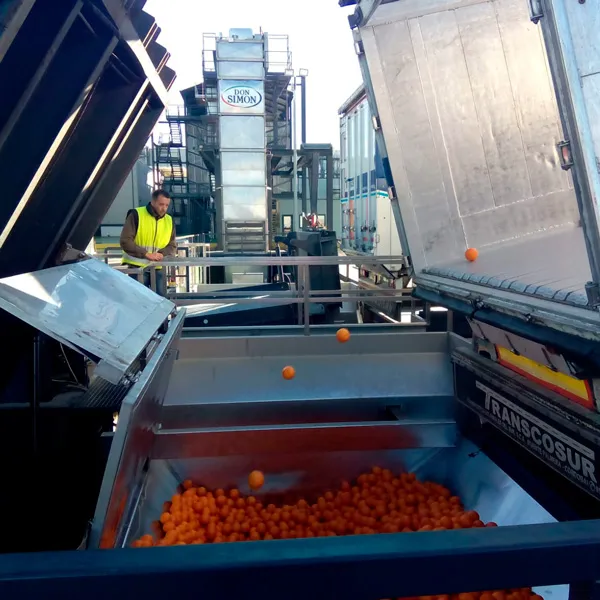
Bulk haulage
Grain, citrus fruit, wood chip and industrial products carried loose in walking floor and tipper trailers, across Spain, France and Europe.
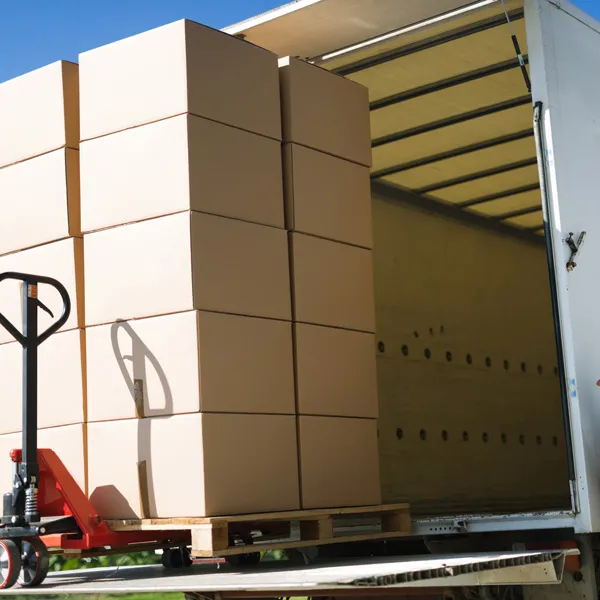
Palletised freight
Palletised goods as full loads, in curtainsiders loaded from the side or the rear, and in refrigerated trailers when they need to stay cool.
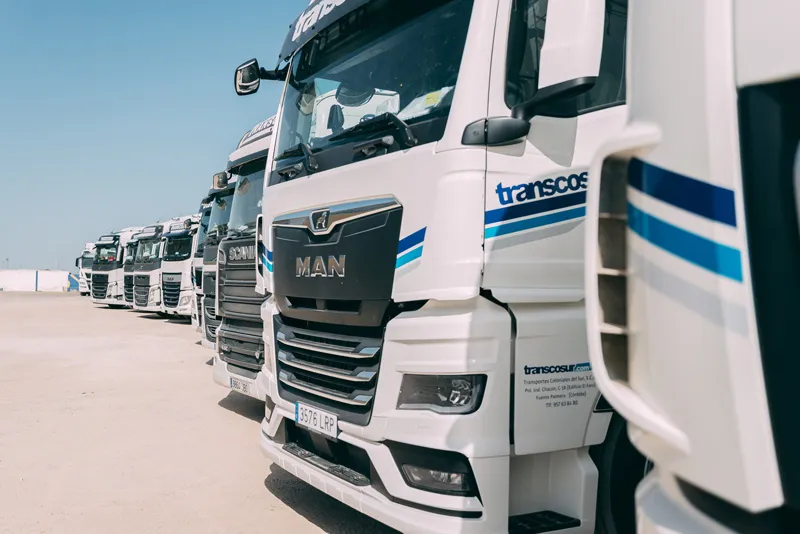
Groupage
For when you cannot fill a lorry: your load shares the journey with others in a curtainsider and you pay for the space it takes up.
Spain and France
Regular routes between Spain and France in both directions, with bulk in walking floor and tipper trailers, biomass, scrap, palletised freight and groupage.
Get a quote
Request a quote for your load
Tell us what needs moving and between which points. We will call you back with a price and availability.