
CMR consignment note: what it is and how to fill it in
Guides · Published on
The CMR travels with every lorry that loads in one country and delivers in another. Here is how it works, based on the text of the Convention, and what to check before you sign it.
The CMR consignment note is the document that travels with the goods when a lorry loads in one country and delivers in another, for instance a load from the Midlands to a customer in Seville or Bordeaux. It takes its name from the Convention on the Contract for the International Carriage of Goods by Road, signed in Geneva on 19 May 1956, which the United Kingdom joined in 1967 according to the United Nations Treaty Collection. This guide explains, with the text of the Convention in hand, what the CMR is, who fills it in, how many copies there are, which boxes matter and what to do if goods arrive damaged. It is general information: for a significant claim, take advice.
What is a CMR consignment note?
A CMR consignment note is the document of international road freight that serves as evidence of the contract of carriage, of the goods handed to the haulier and of their apparent condition. It is governed by the 1956 CMR Convention, which also sets out the liability of the sender, the haulier and the consignee, and the time limits for claims.
One point is worth keeping in mind: the CMR is not the contract, it is the evidence of it. Article 4 of the Convention says that if the consignment note is missing, irregular or lost, the contract remains valid and still subject to the Convention. What changes is how hard it becomes to prove what was loaded.
When does the CMR Convention apply?
The CMR Convention applies to every contract for the carriage of goods by road for reward when the place of collection and the place of delivery are in two different countries, at least one of which is a party to the Convention. Where the sender or the haulier is based makes no difference: the route decides.
The United Kingdom, Spain and France are all parties, so a load from Britain to Spain or France, or a job between Spain and France, travels under CMR. It is everyday work in road freight between Spain and France, where the same lorry can run south with one load and north with another, each with its own consignment note.
Article 1 excludes three cases: consignments under international postal conventions, funeral consignments and furniture removals. And if the lorry travels part of the way on a ship or a train without the goods being unloaded, Article 2 keeps the Convention in force for the whole journey.
Who fills in and signs the CMR?
The CMR is signed by the sender and the haulier at collection, and by the consignee on delivery. The Convention does not say who writes it, but it does say who answers for the details: the sender is liable for what it states about the goods, the destination and the instructions. So the shipper should check it before signing.
In practice, sometimes the shipper prepares it and sometimes the haulier fills it in from the details provided. Article 7 covers the second case: if the haulier enters those details at the sender’s request, it is deemed to be acting on the sender’s behalf. A mistake in the weight, the delivery address or the description of the goods remains, in principle, the responsibility of whoever ships them.
How many copies does a CMR have, and who gets each one?
A CMR is made out in three original copies signed by the sender and the haulier. The first goes to the sender, the second travels with the goods and is handed to the consignee, and the third is kept by the haulier. This is Article 5, which accepts printed signatures or stamps where national law allows.
The first copy has a role that is easy to forget: Article 12 requires it to change the instructions during the journey, for example to deliver to another address or another consignee. Article 5 also lets either party ask for a separate note for each vehicle, each type of goods or each lot. That is standard in groupage and part loads, where each consignment sharing the lorry has its own CMR.
The boxes that matter
Article 6 lists what the consignment note must contain and what is added only where it applies:
| Always | Where applicable |
|---|---|
| Place and date of issue | Ban on transhipment |
| Sender, haulier and consignee, with addresses | Charges the sender agrees to pay |
| Place and date of collection, place of delivery | Cash on delivery amount |
| Nature of the goods and method of packing | Declared value or special interest in delivery |
| Number of packages, marks and numbers | Instructions on insurance |
| Quantity, by gross weight or otherwise | Agreed time limit for the carriage |
| Carriage charges | List of documents handed to the haulier |
| Customs and other instructions | |
| Statement that the carriage is subject to the Convention |
The last line of the first column matters more than it looks: if it is missing, Article 7 makes the haulier liable for the resulting costs and damage. Before signing, check that it is there, printed or written.
What are the haulier’s reservations at collection?
Reservations are the notes a haulier writes on the CMR at collection when it cannot check the number of packages, or when it sees a problem with the goods or their packing. They must give reasons, and they do not bind the sender unless the sender has expressly accepted them on the consignment note, under Article 8.
If the haulier enters no reasoned reservations, Article 9 presumes that the goods and their packing were in apparent good condition and that the packages matched the note.
In bulk haulage there are no packages to count, and the quantity is stated by gross weight or otherwise, as Article 6 allows. That is why the weighbridge ticket at origin matters so much. Article 8 also lets the sender require the haulier to check the gross weight; the haulier may charge for that check, and the result is entered on the CMR.
What should you do if goods arrive damaged?
If goods arrive with visible damage, the consignee must record reservations at the time of delivery, stating the general nature of the loss or damage. If the damage is not apparent, the consignee has seven days from delivery, not counting Sundays and public holidays, to send written reservations to the haulier, under Article 30.
Without reservations, the goods are presumed, unless proved otherwise, to have been received in the condition described on the note. Delay works differently: it only gives a right to compensation if a written reservation is sent within twenty-one days of the goods being placed at the consignee’s disposal.
A useful reservation is specific: “received under reservation” on its own does little; “three pallets with torn film and crushed cartons” supports a claim later, ideally with photos.
How far is the haulier liable?
For loss or damage, compensation is based on the value of the goods at the place and time of collection, capped at 8.33 units of account per kilogram of gross weight short. The unit of account is the Special Drawing Right of the International Monetary Fund, under Article 23 of the Convention.
That cap does not apply if a value for the goods or a special interest in delivery was declared on the consignment note, under Articles 24 and 26. For delay, compensation never exceeds the carriage charges. And the time to go to court is short: Article 32 sets a limitation period of one year, or three years for wilful misconduct.
Is there an electronic CMR?
Yes. The Additional Protocol to the CMR Convention, signed in Geneva on 20 February 2008, allows the consignment note to be issued electronically, the e-CMR, with the same value as the paper version. Spain acceded in 2011, France in 2016 and the United Kingdom in 2019, according to the United Nations Treaty Collection.
The format changes, not the rules: the same details, the same signatures, now electronic, and the same reservations.
Before loading: a quick checklist
- Parties: exact sender, consignee and delivery point, with full addresses.
- Goods: a clear description, the packing, and the real gross weight or quantity, not a guess.
- Packages: number, marks and numbers that match what goes on the lorry.
- Documents: those handed to the haulier, listed in their box.
- Instructions: any agreed time limit, declared value or ban on transhipment, in writing.
- Signature: never sign a blank CMR, and keep your copy.
- At delivery: check before signing and record reservations on the spot.
At Transcosur we go through the paperwork for each job with you before loading, so the CMR states exactly what goes on the lorry.
Frequently asked questions
Common questions
Do I need a CMR for road freight to Spain?
Yes, for road haulage carried out for reward. The United Kingdom, Spain and France are all parties to the CMR Convention, so it applies to any job that loads in one of these countries and delivers in another, whatever the haulier's nationality.
Who fills in the CMR consignment note?
The Convention does not say who writes it, but it does say who answers for the details: the sender is liable for what it states about the goods, the consignee and the instructions. So check the CMR before signing it, even when the haulier prepares it.
What happens if the CMR is lost?
The contract of carriage still exists and is still governed by the Convention, under its Article 4. What you lose is the easiest proof of what was loaded and in what condition, so always keep your own copy.
How long do I have to report damage?
Visible damage is noted at the time of delivery. Damage that cannot be seen must be reported to the haulier in writing within seven days of delivery, not counting Sundays and public holidays. Legal action is generally time-barred after one year.
Is an electronic CMR valid?
Yes, under the 2008 protocol on the electronic consignment note, the e-CMR. The United Kingdom, Spain and France have all acceded to it, and it has the same value as the paper version.
Our services
How we do it
Spain and France
Regular routes between Spain and France in both directions, with bulk in walking floor and tipper trailers, biomass, scrap, palletised freight and groupage.
Bulk haulage
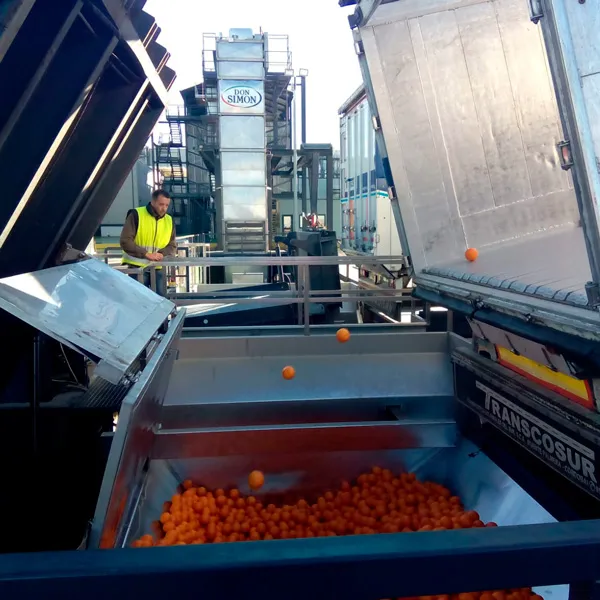
Grain, citrus fruit, wood chip and industrial products carried loose in walking floor and tipper trailers, across Spain, France and Europe.
Groupage
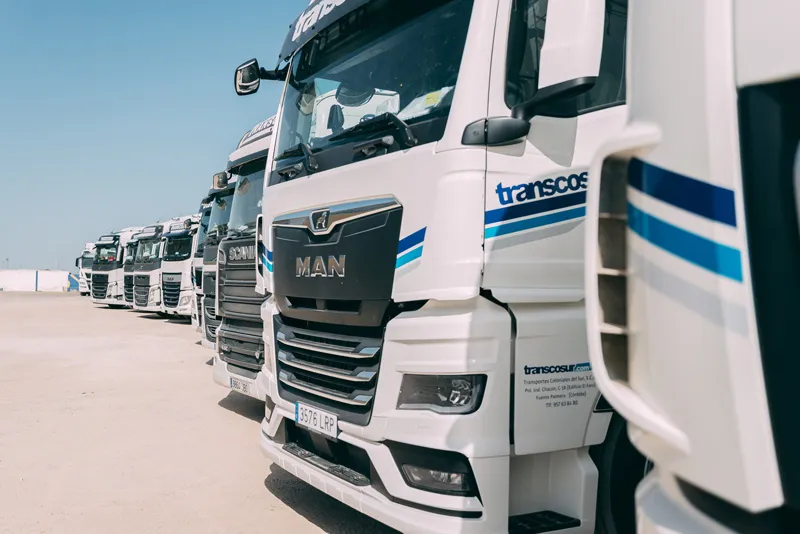
For when you cannot fill a lorry: your load shares the journey with others in a curtainsider and you pay for the space it takes up.
Get a quote
Request a quote for your load
Tell us what needs moving and between which points. We will call you back with a price and availability.